
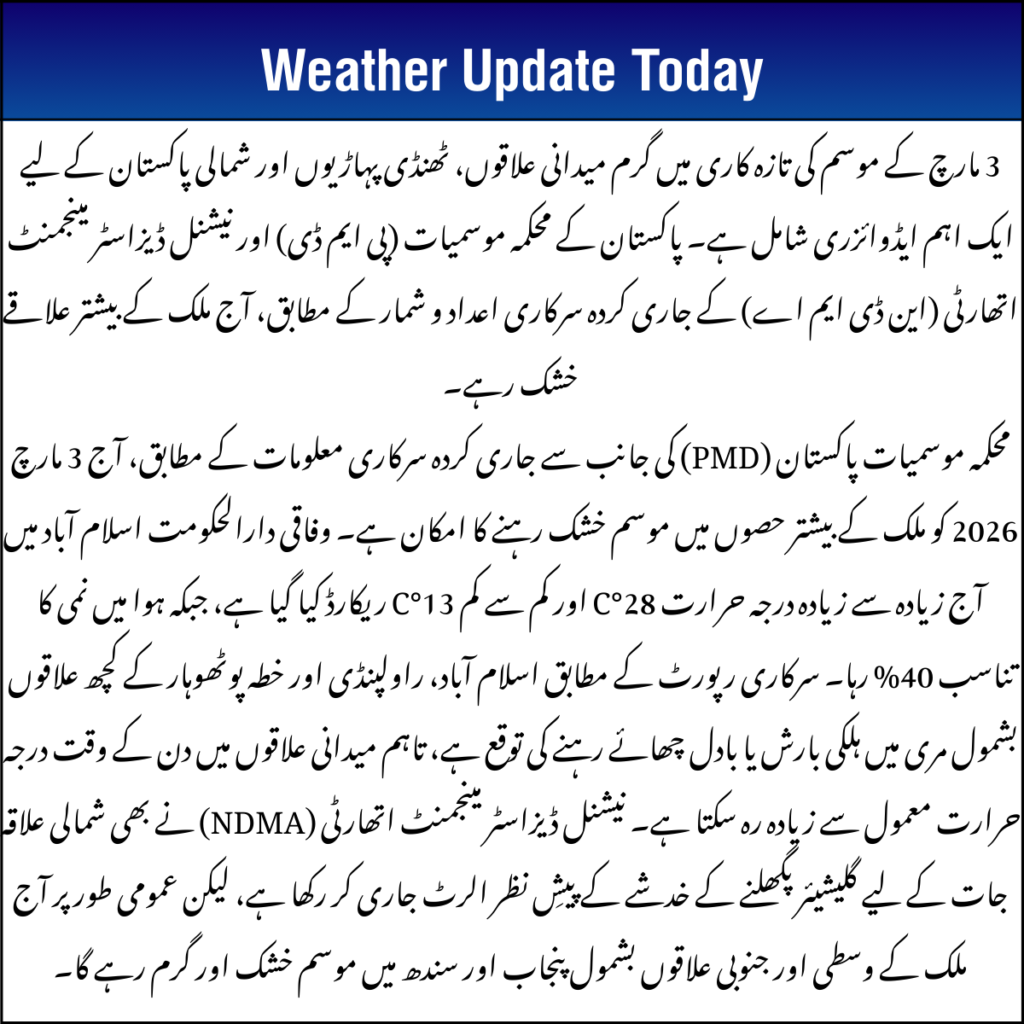
The 3 March weather update brings a mix of warm plains, chilly hills, and an important advisory for northern Pakistan. According to official data released by the Pakistan Meteorological Department (PMD) and the National Disaster Management Authority (NDMA), most parts of the country remained dry today. However, rising temperatures in northern regions have prompted a Glacial Lake Outburst Flood (GLOF) advisory. Here’s the complete national breakdown.
Table of Contents
| Region | Weather Summary |
| Islamabad | High 28°C, Low 13°C, 40% humidity |
| Punjab | Mostly dry, partly cloudy in Pothohar |
| Rawalpindi | Partly cloudy skies |
| Attock | Mild daytime, cool night |
| Sindh | Dry and warm (33–36°C) |
| Balochistan | Dry conditions |
| Khyber Pakhtunkhwa | Partly cloudy in upper areas |
| Gilgit-Baltistan | GLOF advisory due to snowmelt |
3 March Weather Update Overview – Dry But Warming Trend Continues
According to the official forecast available on the PMD website, mainly dry weather prevailed across Pakistan on March 3, 2026. Daytime temperatures in the plains were recorded above seasonal averages.
Northern and hilly areas remained cold during early morning and nighttime hours. The NDMA also reviewed snowmelt conditions in sensitive glacial zones.
3 March Weather Update for Islamabad & Punjab – Warm Days, Mild Nights
Islamabad recorded a maximum temperature of 28°C and a minimum of 13°C. Humidity levels stayed around 40%, making the weather comfortable but slightly warm in the afternoon.
Pothohar region, including Rawalpindi and Attock, experienced partly cloudy skies. The rest of Punjab remained dry throughout the day.
Key Observations in Punjab:
- Warm afternoons across central districts
- Partly cloudy skies in northern Punjab
- No rainfall reported
- Night temperatures remain pleasant
3 March Weather Update for Sindh & Balochistan – Dry and Warm Conditions Persist
Official reports confirm dry and warm conditions in Sindh and Balochistan. Temperatures in Sindh ranged between 33°C and 36°C, especially in interior districts. Balochistan remained dry, with cool evenings in Quetta and surrounding areas.
Southern Region Weather Highlights:
- No rainfall recorded
- Warm winds during daytime
- Higher temperatures in interior Sindh
- Stable atmospheric conditions
Residents are advised to stay hydrated as daytime heat gradually increases.
KP & Northern Areas – GLOF Advisory Issued
Partly cloudy weather was observed in upper Khyber Pakhtunkhwa and Gilgit-Baltistan. Due to rising temperatures, the NDMA has maintained a GLOF advisory for vulnerable glacial regions.
Why GLOF Advisory Matters:
- Rising temperatures accelerating snowmelt
- Increased water pressure in glacial lakes
- Possible flash flood risk in valleys
- Authorities monitoring high-risk zones
What Is GLOF? Step-by-Step Explanation
A Glacial Lake Outburst Flood (GLOF) occurs when water from a glacial lake suddenly bursts due to pressure or melting.
Step-by-step explanation:
- Snow and glaciers melt due to rising temperature.
- Water accumulates in glacial lakes.
- Ice or natural dams weaken.
- Sudden release of water causes flash flooding downstream.
Helpline & Contact Information
For weather updates and emergency support, citizens can contact:
Pakistan Meteorological Department (PMD)
National Disaster Management Authority (NDMA)
Website: https://www.ndma.gov.pk/
Provincial Disaster Management Authorities (PDMA) are also available in each province for local assistance.
Conclusion
The 3 March weather update confirms dry weather across most of Pakistan, with warmer plains and cold northern nights. While no major rainfall is expected, the GLOF advisory in Gilgit-Baltistan and KP highlights the importance of preparedness.
Authorities continue monitoring sensitive areas closely. Citizens, especially in northern valleys, should remain cautious and follow official guidelines. Stable weather today does not mean zero risk. Temperature changes can quickly impact glacial regions.
FAQs
Q. What is the overall weather condition in Pakistan today?
Mainly dry weather prevailed across most parts of the country, with above-normal temperatures in the plains.
Q. Why has NDMA issued a GLOF advisory?
Rising temperatures are accelerating snowmelt, increasing the risk of glacial lake overflow in northern regions.
Q. Is there any rainfall expected?
No major rainfall has been reported or forecasted for most regions today.
Q. Where can I check official updates?
You can visit the official PMD website or NDMA portal for verified weather alerts and advisories.